
Published on

About Us
Lorem ipsum dolor sit amet, consectetur elit, sed do eiusmod tempor incididunt ut labore et magna aliqua.
Get a free quote
Research Visit to Imperial College London: Leveraging Routine Antenatal Care-Based Surveillance for Malaria in Indonesian Papua
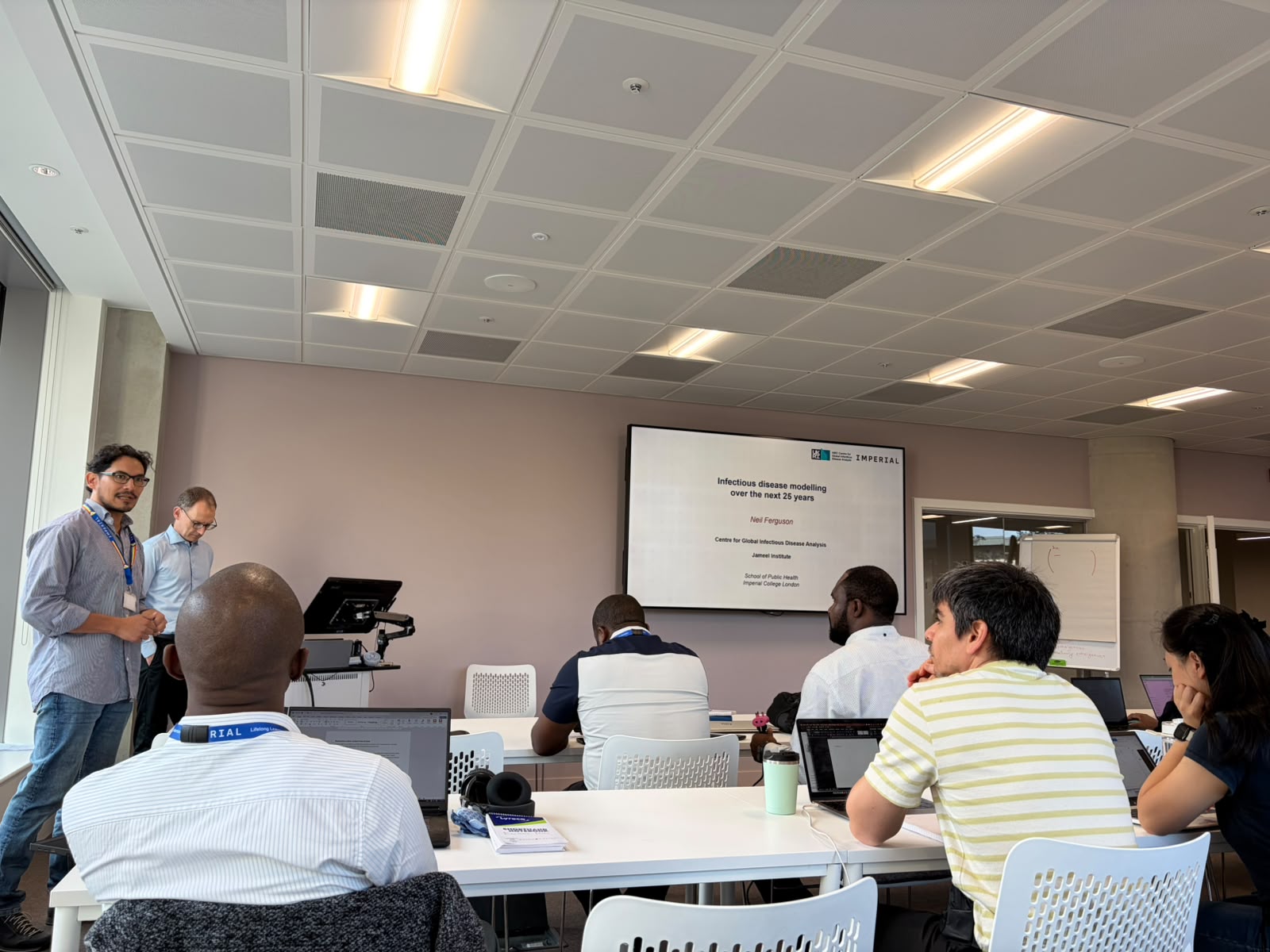
From 23 August to 30 September 2026, Ihsan Fadilah, a researcher from the Geospatial Epidemiology and Biostatistics Programme at the Oxford University Clinical Research Unit (OUCRU), undertook a research visit to Imperial College London, hosted by Associate Professor Patrick Walker from the Department of Infectious Disease Epidemiology.
The visit formed part of a Gates Foundation-funded project, Leveraging Antenatal-Based Surveillance for Malaria, which aims to strengthen malaria surveillance and inform national malaria control strategies through the use of routine antenatal care (ANC) data.
During the visit, Ihsan collaborated with Imperial's research team on analytical approaches, interpretation of malaria surveillance data, and preparation of findings to support decision-making by Indonesia's National Malaria Control Programme.
The collaboration builds on previous research in Tanzania demonstrating that ANC-based malaria surveillance can complement routine passive surveillance and serve as a useful proxy for population-level malaria burden. Unlike passive surveillance, which depends on healthcare-seeking behaviour, ANC-based screening can capture asymptomatic infections during routine visits, potentially providing a more representative measure of community malaria transmission, subject to population differences and ANC attendance.
The ultimate objective is to extend this research to Indonesian Papua, where malaria burden is highest nationally, and assess how ANC data can support targeted interventions.
During the final two weeks, Ihsan participated in Imperial's long-established short course, Introduction to Mathematical Models of the Epidemiology & Control of Infectious Diseases, which has been held annually since 1990. The course strengthened his skills in mathematical modelling of infectious diseases, including through a short project focused on modelling malaria vaccination strategies.
The next step is to co-develop a research programme with Indonesia's Ministry of Health, leveraging ANC data to improve malaria surveillance, guide interventions, and accelerate malaria control and elimination.
Tags:

Tags: