
Published On
About Us
Lorem ipsum dolor sit amet, consectetur elit, sed do eiusmod tempor incididunt ut labore et magna aliqua.
Get a free quote
Learning from the Orang Rimba: What Forest Malaria Teaches SHIELD PAPUA
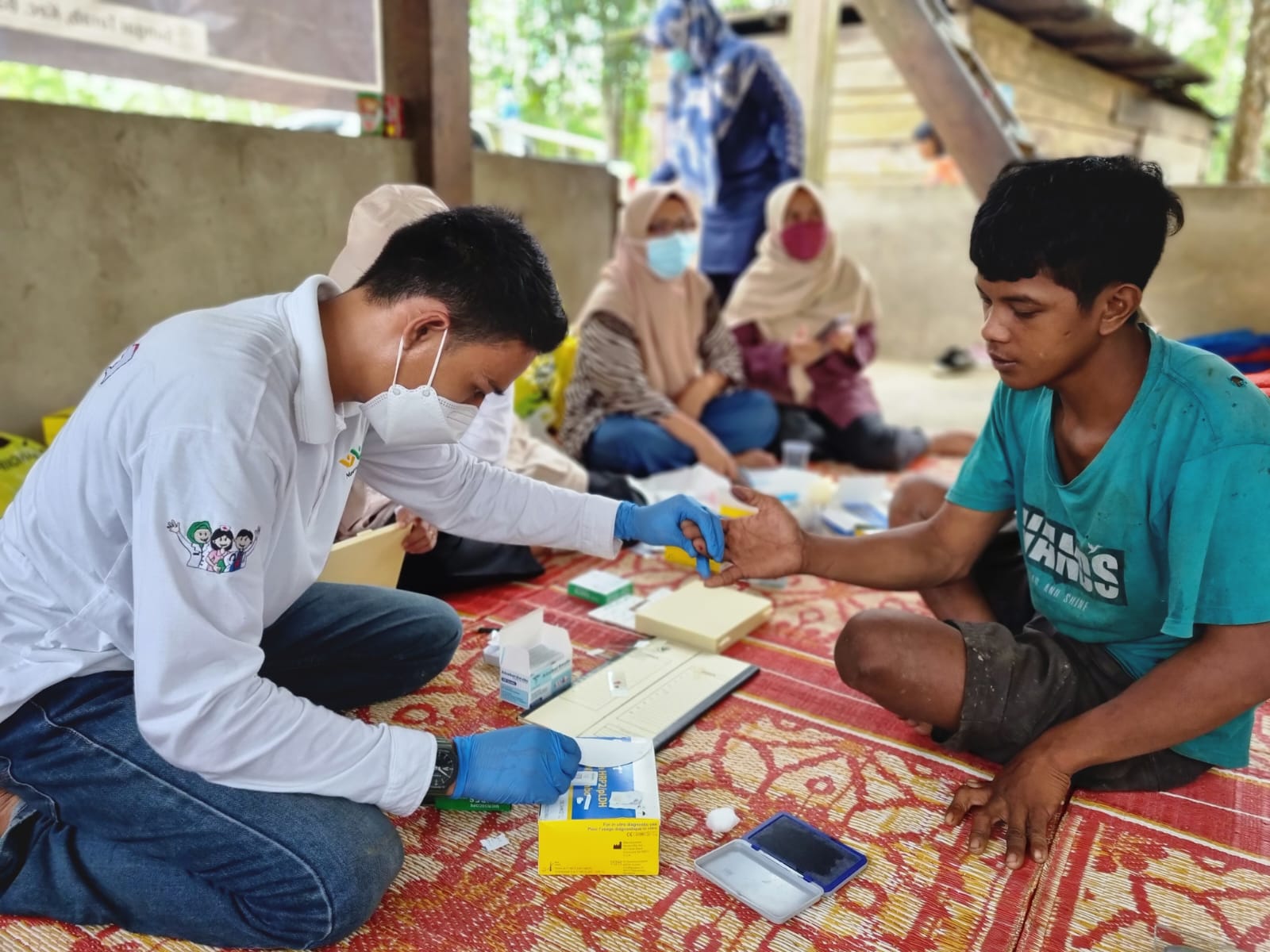
Malaria elimination is often described through targets, indicators and maps. These are important, but they do not always show the social realities behind transmission. The experience of malaria engagement with the Orang Rimba in Jambi reminds us that elimination is not only about finding parasites. It is also about understanding how people live, move, seek care and build trust with the health system.
The Orang Rimba are a forest-dwelling Indigenous community whose lives are shaped by mobility, forest livelihoods, customary leadership and changing ecological conditions. Their movement is not random. It is linked to food, work, social obligations and cultural practices, including melangun, the movement after a death in the community. These patterns make standard health service delivery difficult. They also challenge malaria programmes that are designed around fixed villages, fixed catchment areas and routine facility-based reporting.
For SHIELD PAPUA, this is an important lesson. Many communities in Papua also live across difficult geographies, including forests, river systems, islands, plantations, mining areas and remote settlements. Distance is not only physical. It can also be social, political and cultural. A health post may exist on the map, but people may still delay care if transport is costly, services are irregular, trust is weak, or illness is understood in ways that do not immediately fit biomedical categories.
The Orang Rimba case also shows why diagnosis matters. Studies found that rapid diagnostic tests identified fewer malaria infections than more sensitive molecular methods, suggesting that low-density and asymptomatic infections may remain undetected. This is highly relevant for Papua, where malaria transmission is uneven and where mobile, forest-linked and underserved populations may continue to carry hidden infections. Stronger surveillance needs more than better tools; it needs the right strategy for the right population.
Another lesson is that local illness concepts should not be treated as barriers to be corrected. Among the Orang Rimba, malaria may be discussed through terms such as demam kuro, with explanations that include mosquito bites, fatigue, food, environmental conditions and spiritual dimensions. People may combine traditional remedies with treatment from health facilities. This is not simply “lack of knowledge”. It is a practical way of navigating illness under uncertainty.
The strongest message for SHIELD PAPUA is that malaria elimination must be built through trust. Collaboration with long-standing local organisations, customary leaders and community members helped make engagement with the Orang Rimba more acceptable and respectful. In Papua, the same principle applies. Surveillance, diagnosis and response will be stronger when communities are not only treated as targets of intervention, but as partners who understand their own landscapes, risks and routes to care.
The last mile of malaria elimination is therefore not just a technical space. It is a human, ecological and relational space. This is where SHIELD PAPUA can contribute: by linking epidemiology, geospatial analysis, diagnostics, health systems and medical anthropology to make malaria work more precise, more inclusive and more trusted.
Tags:

Tags: