Posted By

About Us
Lorem ipsum dolor sit amet, consectetur elit, sed do eiusmod tempor incididunt ut labore et magna aliqua.
Get a free quote
Strengthening Infectious Disease Modelling Capacity Across Southeast Asia: SHIELD PAPUA Researchers Share Expertise at the SPARKLE Workshop 2026
-

-
Published on
September 30, 2026
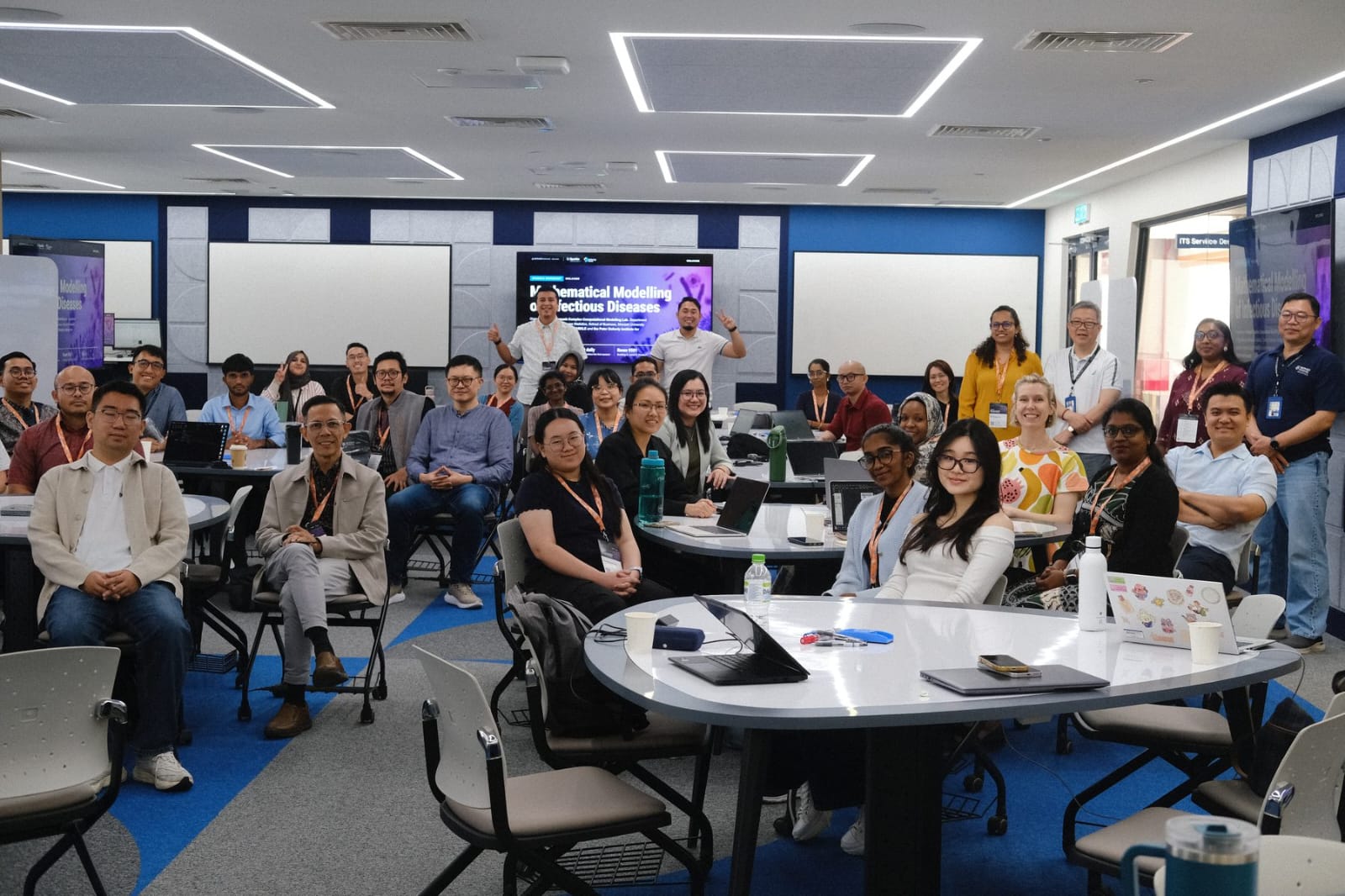
Building mathematical modelling capacity is essential for advancing disease surveillance, outbreak preparedness, and evidence-based health policymaking across the region. From 21–25 September 2026, researchers representing SHIELD PAPUA—Bimandra Djaafara, Kartika Saraswati, Tyas Widayati, Dewi Anastasia Christina, and Henry Surendra—actively participated in the SPARKLE Workshop 2026: Mathematical Modelling of Infectious Diseases, held at Monash University Malaysia in Subang Jaya.

During the intensive five-day hands-on program, Bimandra Djaafara, Kartika Saraswati, Tyas Widayati, and Dewi Anastasia Christina served as key trainers alongside fellow INDEMIC network members (Cicik Alfiniyah, Muhammad Firdaus Kasim, and Prama Putra). The training curriculum covered fundamental mathematical modelling, solving differential equations in R, pathogen model design, COVID-19 outbreak case studies, model fitting, vector-borne disease modelling, and intervention modelling.

Concurrently, researchers from the Infectious and Tropical Diseases Epidemiology research lab at Monash University Indonesia—led by Henry Surendra—participated in the workshop, including Surya Adhi, Richard, and Amalia Nurina. Their active involvement highlights the ongoing commitment to expanding epidemiological modelling skills and fostering regional research partnerships.
Supported by SPARKLE and Monash University Malaysia, this workshop reflects the growing role of SHIELD PAPUA researchers and regional networks in building institutional and analytical capacity for infectious disease control across Southeast Asia.
Tags:
Tags: