Posted By

About Us
Lorem ipsum dolor sit amet, consectetur elit, sed do eiusmod tempor incididunt ut labore et magna aliqua.
Get a free quote
Improving Mosquito Collection Quality: Spatial Emanator Study Collectors Attend Entomology Refresher Training at Malaria Center Mimika
-

-
Published on
September 26, 2026
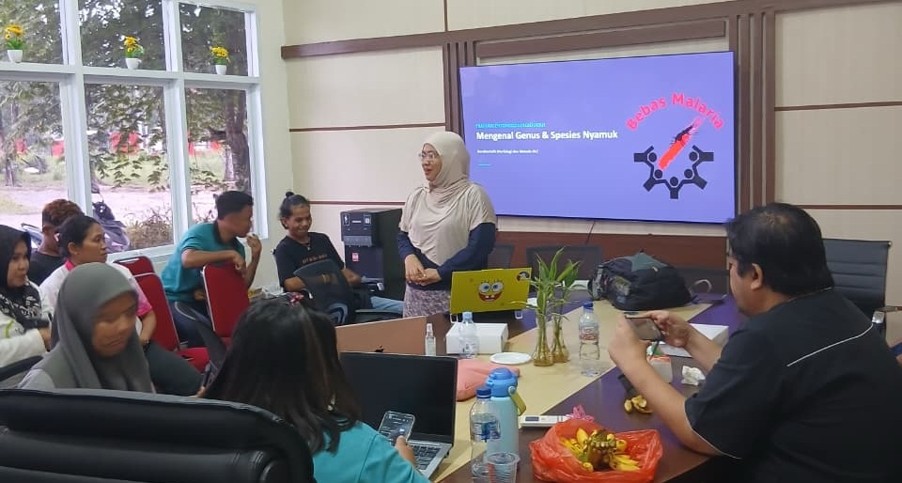
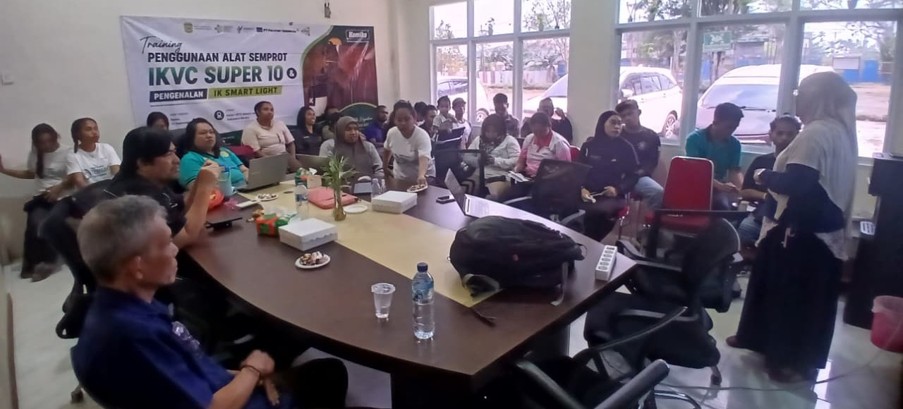
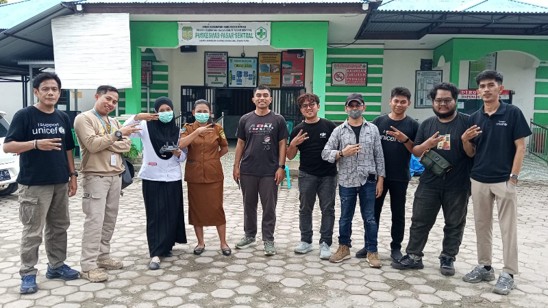
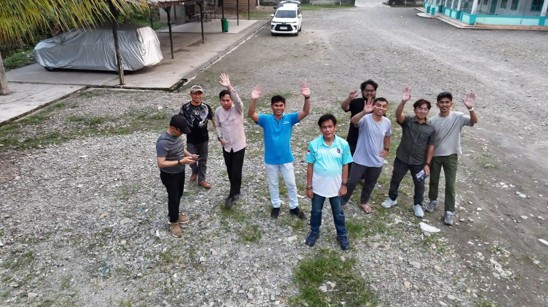
An operational and efficacy study of spatial emanators (SE) is currently underway in Pasar Sentral Subdistrict, Mimika Regency, running from June to December 2026. To maintain the quality of field data, the research team held a refresher training for mosquito collectors at Malaria Center Mimika on Friday, 25 September 2026.
A spatial emanator is a vector control device that passively releases a volatile insecticide active ingredient, such as transfluthrin, into the air of an indoor space. It requires no electricity, heat, or burning. The airborne active ingredient creates a protective space that repels mosquitoes, disrupts their ability to find humans and take a blood meal, and incapacitates or kills them. Because it works throughout the entire room, SE has the potential to protect household members when they are not yet, or not, under a bed net, for example during the evening and night while they are still active. This technology is regarded as a complement to insecticide-treated nets in efforts to reduce malaria transmission.
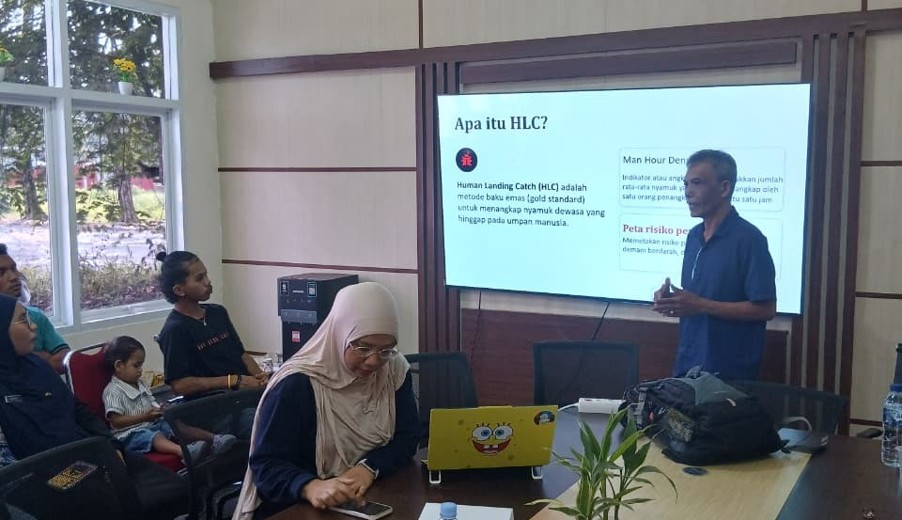
To determine whether the technology works, mosquitoes are collected using the Human Landing Catch (HLC) technique in 10 control houses and 10 intervention houses. Collections take place from 18:00 to 06:00 local time (WIT), during which mosquitoes landing on collectors are immediately captured and recorded hourly. Each house is sampled twice a month. Collections are carried out by trained staff from Malaria Center Mimika together with trained local personnel.
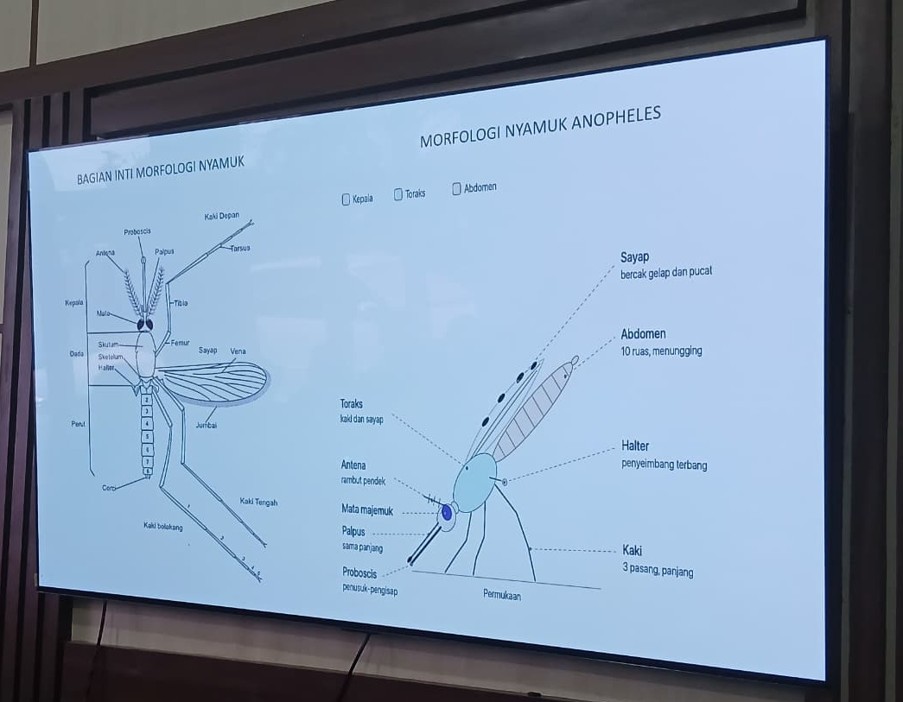
The refresher training featured two experienced facilitators. Siti Andriani Anwar, SKM, MSc, who in 2024 conducted a study titled "Population Dynamics of Anopheles as Malaria Vectors in Timika", delivered a session on identifying mosquito genera and species, focusing on the three main genera, Anopheles, Aedes, and Culex, including their distinguishing features and roles as disease vectors.
Meanwhile, Dwiko Susapto, a veteran field entomologist with 30 years of experience in entomology in Indonesia, shared practical tips on conducting Human Landing Catches, from techniques for capturing landing mosquitoes and maintaining consistency throughout overnight observations to proper specimen handling and recording.
Through this training, young field staff are expected to gain a deeper understanding of disease vector characteristics and improve the quality of mosquito collections. Accurate and consistent entomological data are an essential foundation for assessing the effectiveness of spatial emanators as an innovation in malaria control in Mimika, one of the areas with the highest malaria burden in Indonesia.
Tags:
Tags: