
Published on

About Us
Lorem ipsum dolor sit amet, consectetur elit, sed do eiusmod tempor incididunt ut labore et magna aliqua.
Get a free quote
Mapping 1,615 Geospatial Points, OPERA TIMIKA Project Completes Household Survey and Mosquito Breeding Site Identification in Pasar Sentral
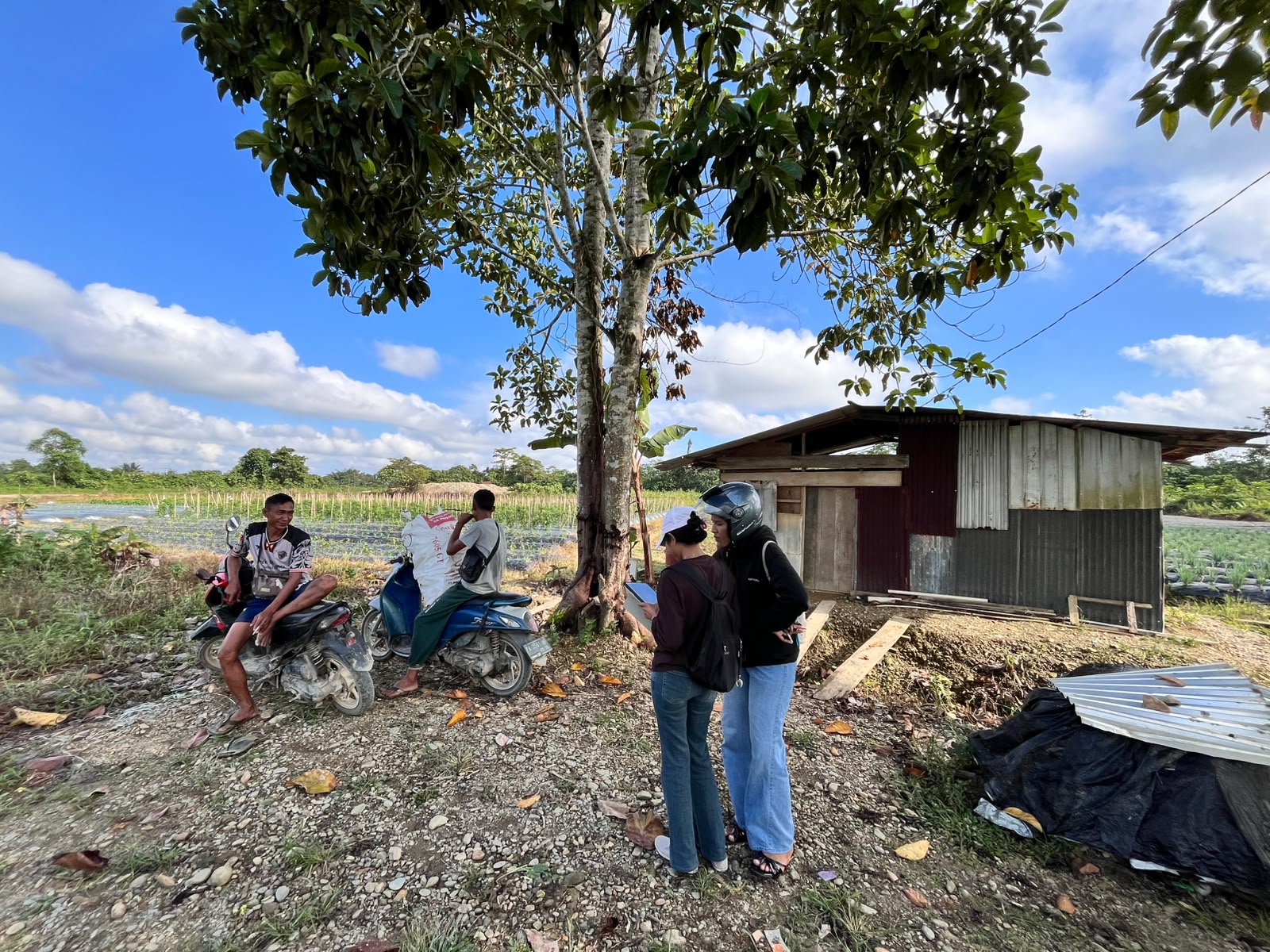
TIMIKA – The research team behind the outdoor malaria operational feasibility and protection study (OPERA TIMIKA) has successfully concluded its initial baseline demographic data collection, building typology assessment, and spatial mapping of mosquito breeding sites in Pasar Sentral Urban Village, Mimika Baru District. Initiated with an intensive enumerator training session on 17 July 2026 and followed by seven days of field deployment through 24 July 2026, the project mapped and verified 1,615 geospatial entry points using the Android-based KoBoCollect platform.

To ensure spatial precision and prevent coverage gaps, the field deployment enforced a comprehensive geotagging protocol across every physical structure footprint. In addition to complete household interviews covering 765 owner-occupied residences and 430 rental units (boarding rooms and houses), enumerators locked GPS coordinates for 195 vacant buildings, 117 commercial establishments, 47 public facilities and places of worship, as well as 256 non-consent points whose physical locations remain spatially cataloged. The systematic sweep conducted by five paired enumerator teams identified the highest spatial building density in RT 18, RT 12, RT 19, and the corridor in RT 14.

Beyond housing profiles, field teams successfully inventoried and geo-locked seven primary larval breeding sites operating in close proximity to residential zones. Identified high-risk breeding sites include a dense swamp area in RT 11, sediment-clogged primary drainage along Hasanuddin Street in RT 12, water pools created by heavy machinery tires in RT 14, and stagnant household wastewater channels situated between 3 to 15 meters from living quarters. High housing density, with structures separated by merely 1 to 2 meters, creates a humid micro-environment favorable for mosquito resting sites.
Analysis of housing characteristics and behavioral patterns reveals notable exposure risks to outdoor mosquito bites during peak biting hours (18:00–22:00 WIT). While most structures feature corrugated zinc roofing and concrete walls, only 27.82% of households have installed protective mesh screens on their wall vents. Furthermore, evening outdoor activity remains substantial as residents gather on verandas, operate local kiosks, or work as motorcycle taxi drivers, contrasted by a low personal protection rate where only 4.5% of residents regularly apply insect repellent lotion.

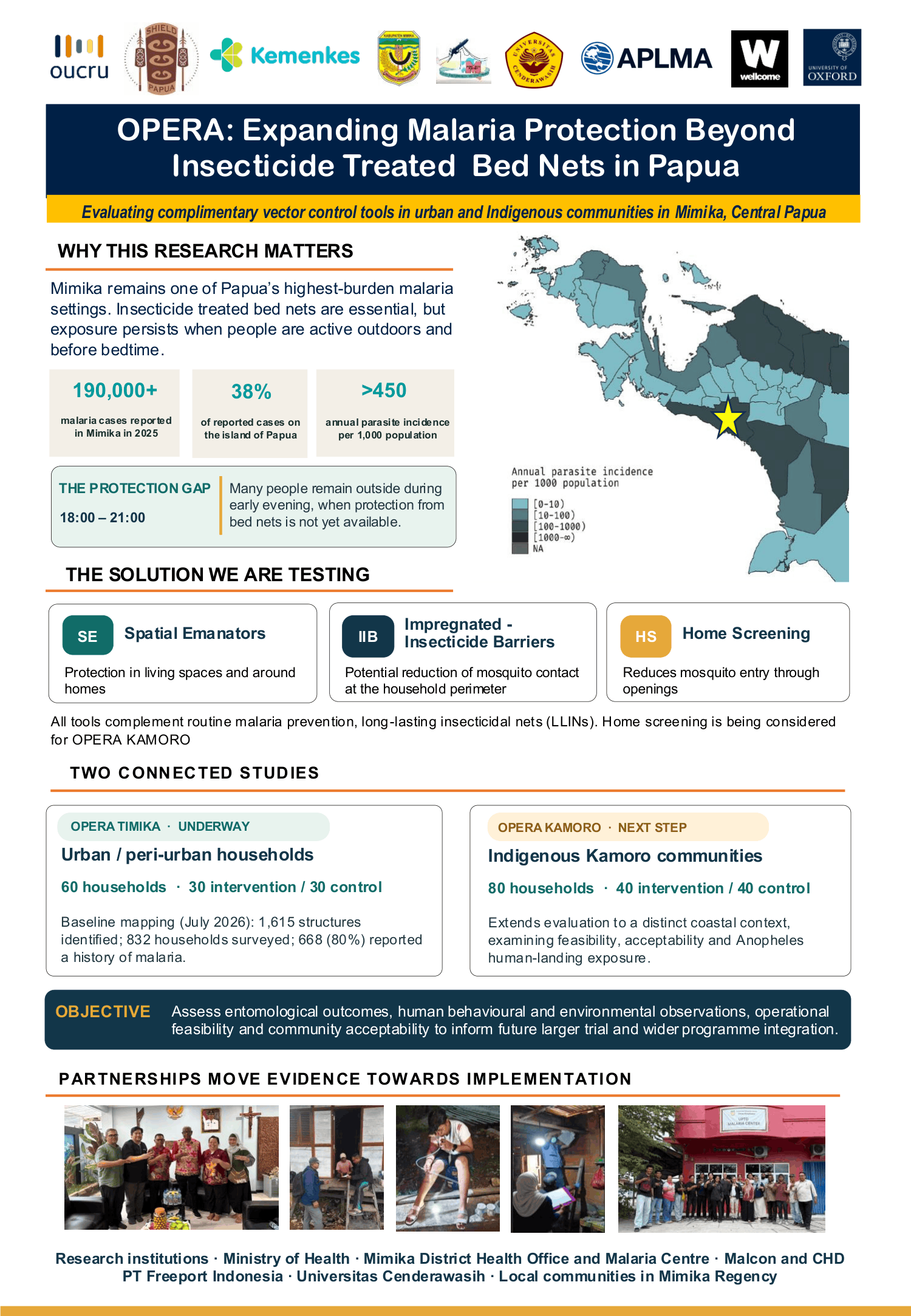
The successful compilation of this baseline dataset (M0) provides a robust empirical foundation for the next phases of the OPERA TIMIKA project. The verified 1,615 spatial points will guide microstratification zoning to select 60 pilot study households. These households will be equally allocated into an intervention group—receiving spatial emanators (SE) containing transfluthrin and insecticide-impregnated barriers (IIB) with deltamethrin—and a control group, both monitored through routine entomological surveillance and longitudinal health checks.
Tags:


Tags: