
Published on

About Us
Lorem ipsum dolor sit amet, consectetur elit, sed do eiusmod tempor incididunt ut labore et magna aliqua.
Get a free quote
Strengthening Field Readiness, OPERA TIMIKA Project Holds Household Survey Training at Mimika Malaria Center
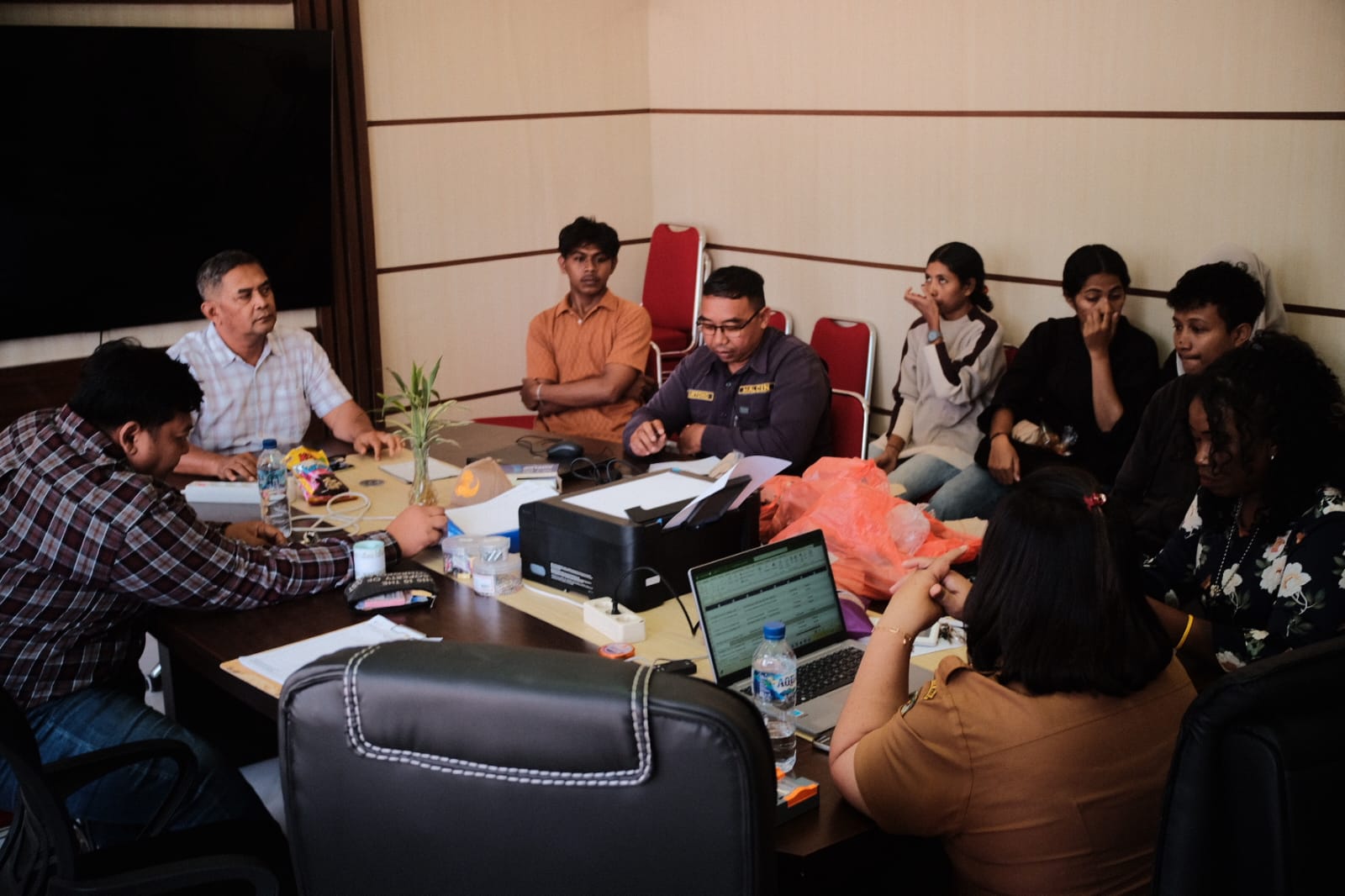
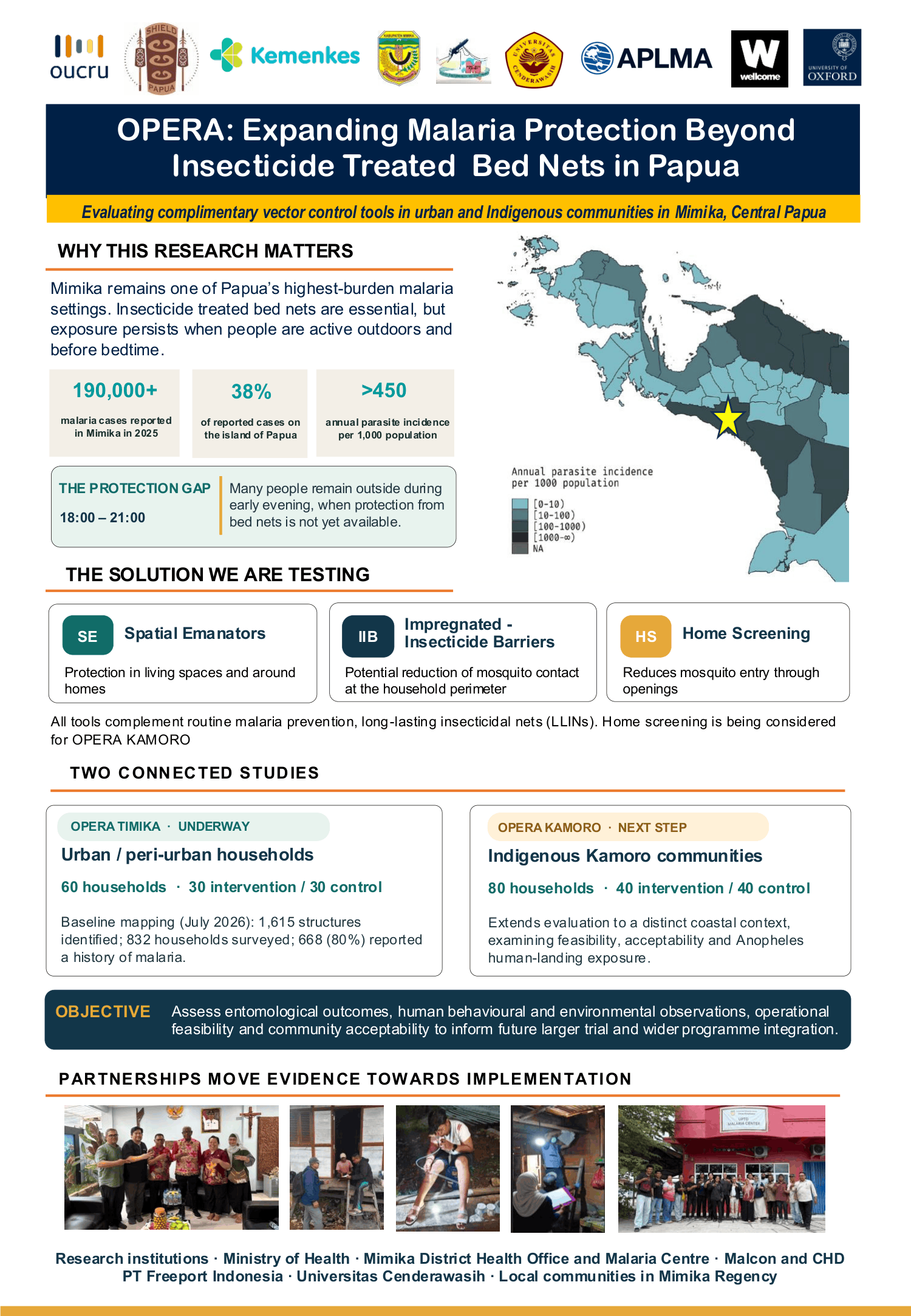
TIMIKA – Marking the launch of the operational feasibility and outdoor vector protection study (OPERA TIMIKA), the research team conducted an intensive training session for field enumerators on Friday, 17 July 2026, at the Mimika Malaria Center UPTD. The training was designed to equip data collectors with technical interviewing skills, Android-based geospatial mapping capabilities, and quality control protocols prior to community engagement in the targeted area of Pasar Sentral Urban Village.
The training session was launched with strong support from local health authorities, featuring key attendance from Imelda Jakung Ohoiledjaan, Head of the Mimika Malaria Center UPTD, alongside Marthen Luther Pohwainjaan representing the Environmental Health Division of the Mimika District Health Office. This multi-stakeholder collaboration highlights the critical need for accurate spatial and behavioral data to drive evidence-based malaria elimination strategies in Mimika Regency.

The session was facilitated by Dedi Sudiana as the lead trainer, supported by Aria A. Satwiko and I Nyoman Indra Kresna Wijaya as co-facilitators. Throughout the half-day workshop, the facilitators guided participants through field workflows, including community orientation on Spatial Emanators (SE) and Insecticide-Impregnated Barriers (IIB), informed consent procedures, and standard household ID conventions.
Nine enumerators representing local health institutions actively participated in the capacity-building program. Representatives from the Malaria Center—Wartono, Fakhriza, Yoan, Amel, and Jheny—joined forces with students and alumni from Poltekkes Kemenkes Jayapura Timika Campus, including Delristo, Christine, Andre, Najwa, and Gisela. Participants were trained in a paired job-sharing model, where one enumerator takes the role of primary community communicator while the other operates the KoBoCollect application, capturing high-accuracy GPS coordinates under 10 meters and recording physical housing characteristics.

To ensure field readiness, the curriculum prioritized practical paired interview simulations and edge-case management. Enumerators practiced manual screening protocols to distinguish occupied dwellings, commercial structures, short-term rentals, and polite handling of non-consent cases. Additionally, the daily monitoring protocol (Nightly Run) was introduced to establish seamless data synchronization between field supervisors in Timika and data quality controllers in Jakarta.
With the completion of this training, the enumerator team is fully prepared to collect high-quality baseline household data. This spatial dataset will serve as a foundational layer for deploying targeted outdoor malaria vector protection interventions across Timika.
Tags:

Tags: